The Lesson on the Floor.

Updated: Jun 18
A few months ago, I was working with a client in his early sixties. He had spent most of his career leading teams, managing complex projects and carrying the responsibilities that often come with professional success. Like many of the people I work with, he was intelligent, highly capable and deeply committed to his work. Yet despite exercising regularly and maintaining what most people would consider a healthy lifestyle, he often felt tired, tense and mentally exhausted. He described feeling as though he was constantly "on", even when embarking on his weekend.
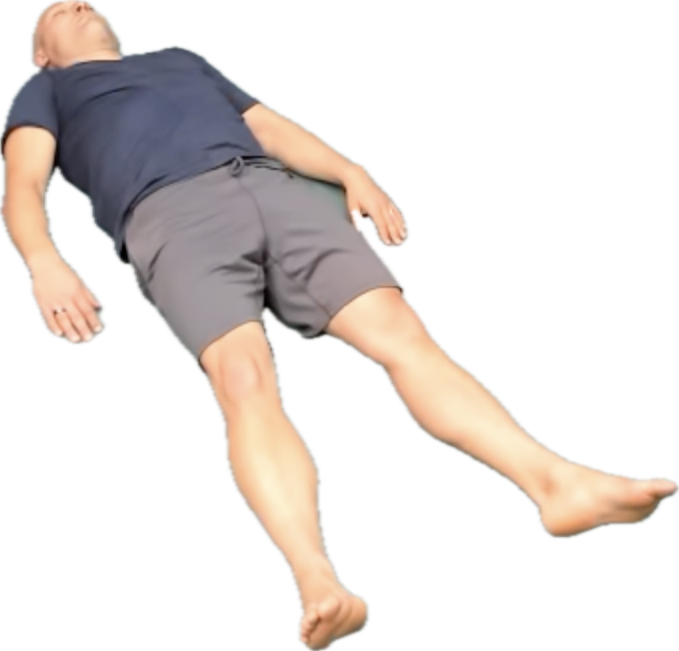
During our session, he was lying comfortably on a mat exploring a sensing through movement session based on the Feldenkrais Method. The movement he engaged with was remarkably small. A slow turning of the head while paying attention to how the movement travelled through his neck, shoulders and torso. After several minutes, I invited him to pause and rest. When he sat up, he looked slightly puzzled.
"I didn't realise how hard I was working," he said.
At first glance, his comment seemed odd. After all, he had hardly been moving. There had been no strenuous exercise, no stretching and certainly nothing that would leave most people feeling physically challenged. Yet what he had discovered was something far more significant than muscular effort. He had become aware of the background tension he was carrying every day without even noticing it.
That moment reminded me of one of the most important lessons I have learned through the Feldenkrais Method. Many of us are not exhausted because life is inherently difficult. We are exhausted because we have unknowingly become organised around effort. Over time, our nervous system develops habits of tension, holding and striving that begin to feel normal. We become so accustomed to carrying these patterns that we stop noticing them altogether.
This is particularly common among professionals who have spent decades building careers, raising families and meeting the demands of modern life. Success often requires commitment, discipline and persistence. These are valuable qualities. However, many people eventually discover that the same qualities that helped them achieve their goals can also lead them to ignore the signals coming from their body. The ability to push through discomfort may serve us well during a challenging project or period of change, but when pushing through becomes our default way of living, it can come at a considerable cost.
In recent years, conversations about nervous system regulation have become increasingly common. The phrase appears everywhere, from social media and podcasts to leadership programmes and wellbeing workshops. While the term is sometimes overused, its growing popularity reflects an important reality. More people are beginning to recognise that stress is not simply something that happens in the mind. Stress influences every aspect of our physiology. It affects how we breathe, how we move, how we sleep, how we think and how we recover.
What many people don't realise is that the body and mind is constantly adapting and changing from our experiences. When we spend years responding to deadlines, responsibilities and pressure, the nervous system learns patterns that help us cope. We may tighten our shoulders when concentrating, hold our breath during stressful conversations or unconsciously brace our body throughout the day. Initially these responses may be useful. The challenge is that the nervous system tends to retain what it learns. Habits that were once temporary responses can gradually become our permanent way of functioning.
The result is that many professionals begin experiencing symptoms they simply attribute to ageing. They notice increased stiffness, reduced mobility, slower recovery, disrupted sleep or a growing sense of fatigue. While ageing certainly brings changes, many of these experiences are not solely the result of getting older. They are often the result of years spent organising ourselves around patterns of unnecessary effort.

This is one of the reasons I find the Feldenkrais Method so valuable, particularly for adults over fifty-five. Rather than focusing on fixing symptoms or correcting problems, the method approaches human functioning through the lens of learning. It recognises that the nervous system remains capable of adaptation throughout life. Through gentle movement and directed awareness, people can begin recognising habits they were previously unaware of and discover more efficient alternatives.
This idea can be surprisingly liberating. Most of us have spent our lives being taught that improvement comes through greater effort. If we want better results, we are told to work harder, train harder or push ourselves further. Yet some of the most profound changes occur when we learn how to do less rather than more. When unnecessary effort is reduced, movement becomes easier, breathing becomes freer and the nervous system no longer has to devote so many resources to maintaining tension.
I often think of this as removing the handbrake rather than pressing harder on the accelerator. Many people are already capable, motivated and resilient. The issue is not that they need more drive. The issue is that they are carrying patterns of effort that consume energy without contributing anything useful. Once those patterns become visible, new possibilities emerge.
This becomes increasingly important as we age. Healthy ageing is often discussed in terms of strength, fitness and disease prevention, all of which are important. Yet adaptability may be just as important. The ability to learn, adjust and respond to changing circumstances is one of the defining characteristics of a healthy nervous system. In many ways, the Feldenkrais Method is a practice of maintaining that adaptability. Each lesson invites curiosity. Each movement exploration encourages the brain to notice differences, discover alternatives and expand its options.
What I have observed over many years of working with clients is that the benefits rarely stop with movement. People often arrive hoping to improve their posture, reduce pain or increase mobility. Those outcomes frequently occur. Yet they also begin reporting something else. They feel calmer. They recover more quickly from stressful situations. They become more aware of their reactions. They notice when tension is building before it becomes overwhelming. In other words, they develop a greater capacity for self-regulation.

This makes perfect sense when we consider that movement and nervous system function are inseparable. The way we move reflects the way we organise ourselves. When we learn to move with greater ease, we often discover new ways of thinking, responding and engaging with the world around us. What begins as a movement lesson gradually becomes a lesson in resilience.
Perhaps that is the most important insight of all. Sustainable performance is not about constantly pushing harder. It is about developing the awareness and adaptability required to meet life's challenges without carrying unnecessary effort. The goal is not to eliminate stress. The goal is to create a nervous system that can respond effectively to stress and recover efficiently when the challenge has passed.
For many professionals over fifty-five, this shift in perspective can be transformative. It offers a different path forward—one that supports performance, wellbeing and healthy ageing not through greater effort, but through greater awareness. And sometimes that journey begins with something as simple as lying on a mat and slowly turning your head.
To learn more about the Feldenkrais Method or to organise a sensing through movement session with Jason


Comments